Top 6 Personal Project Management Software in 2026
- Discover 10 fundamentals of project management
- Understand step-by-step plans for PM execution
- Learn tips to avoid 5 common mistakes by beginners
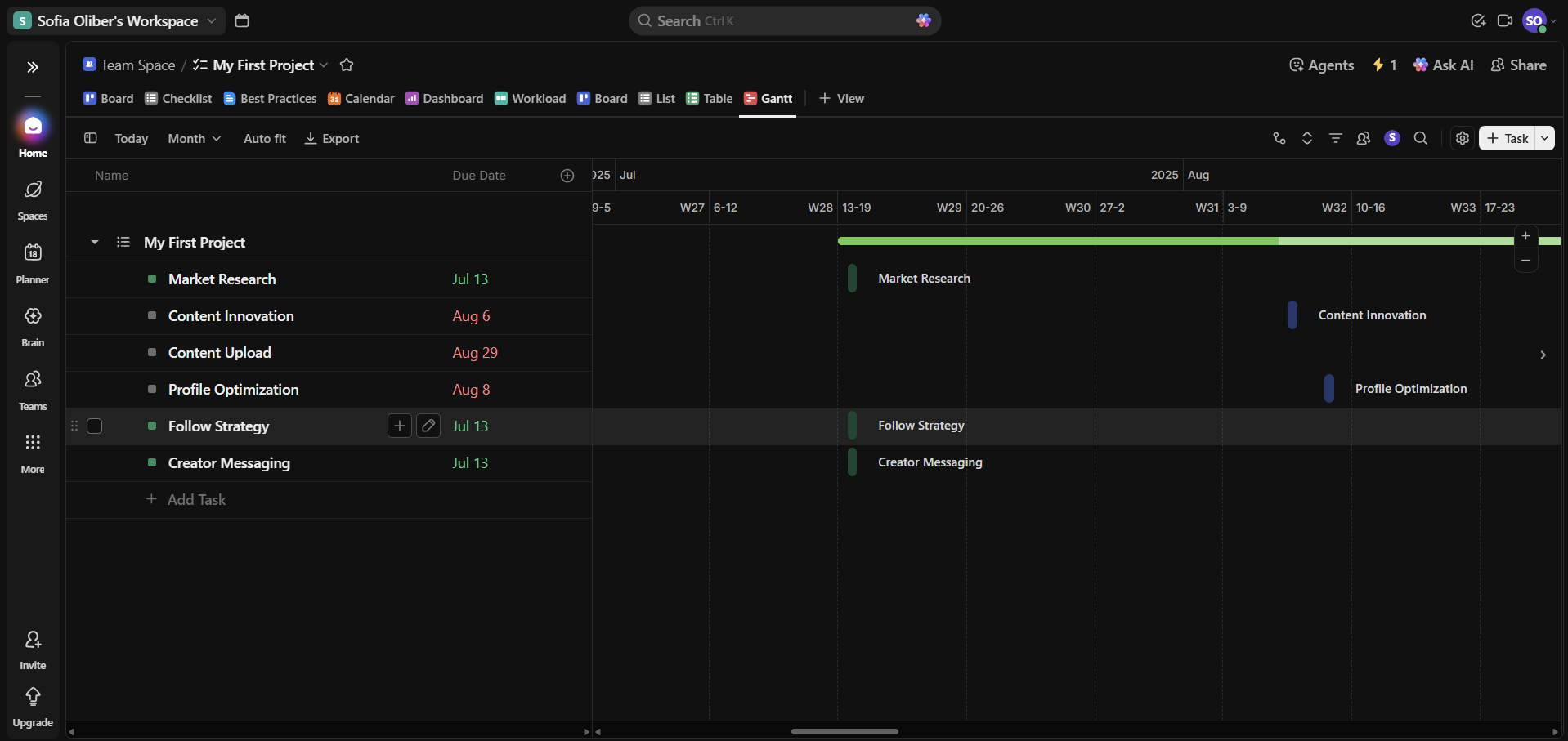
ClickUp’s free plan includes Gantt charts.
ClickUp is one of the most complete project management options, offering essential features such as customizable workflows, advanced views and integrations. It delivers professional results, even as free project management software.
Few platforms bring together so many tools while still delivering a high-quality product. You can customize task organization and workflows, perform repetitive tasks automatically and integrate AI features. However, the software is so extensive that it can feel overwhelming for inexperienced users who might need a more simple task management app.
Opt for ClickUp if you need a powerful tool to manage your projects. If you’re on a budget, ClickUp’s free plan is among the best free project management tools. Read more in our ClickUp review, or you can test its free plan today.

Free Forever
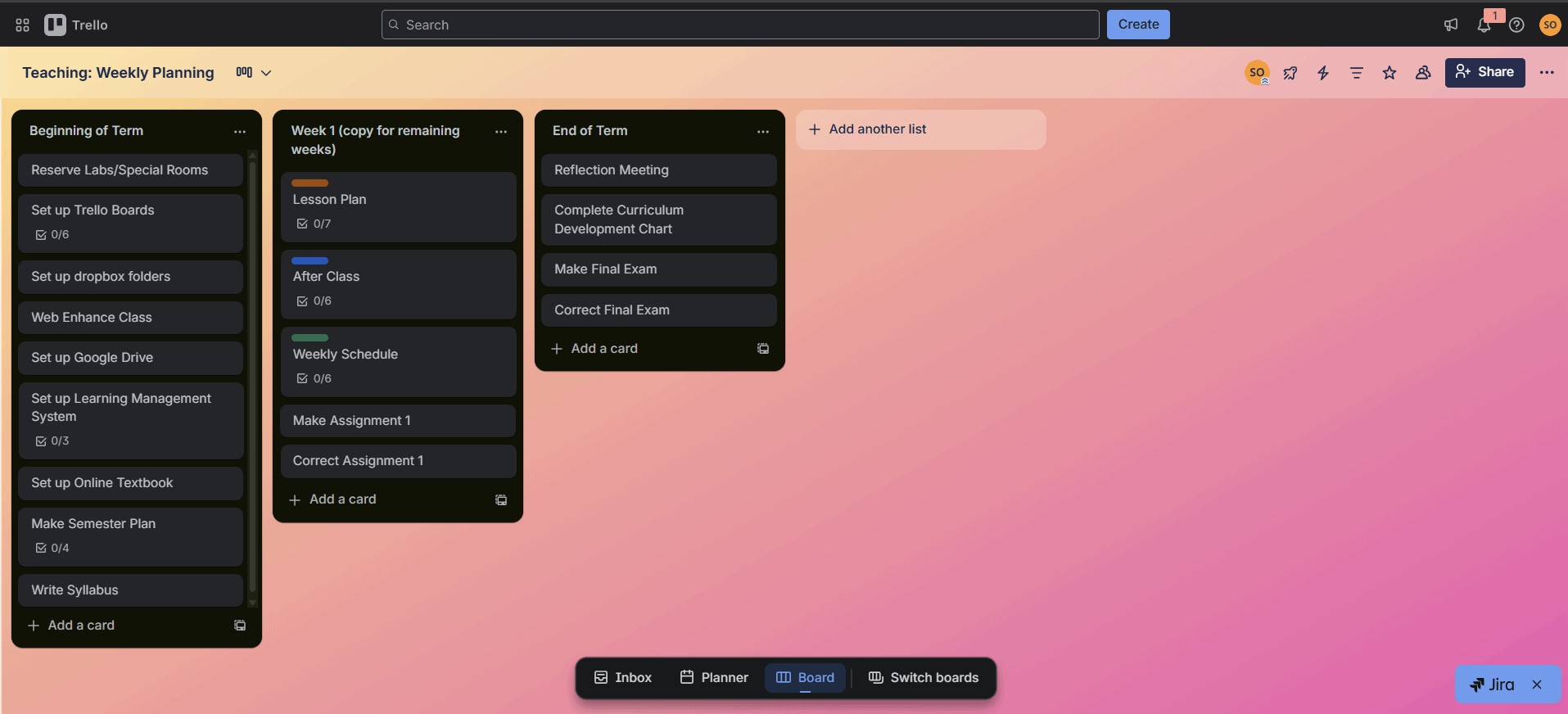
Trello’s kanban board design is simple and effective.
Trello excels at simplicity thanks to its straightforward and familiar interface. The layout is clear from the start: You get a complete kanban-based design with a few more advanced tools.
The fact that Trello is visual and minimalist doesn’t make it less productive. The platform includes key features like automations and AI functionalities to summarize or brainstorm ideas. If that isn’t enough, power-ups are available to upgrade your boards.
Trello’s simplicity is its biggest selling point. It might not be as complete as ClickUp, but it can help with personal or small projects. The Standard plan starts at $5 per user per month, annually. Start using Trello for free, or learn more about it in our Trello review.

Free
Standard
Premium
Enterprise
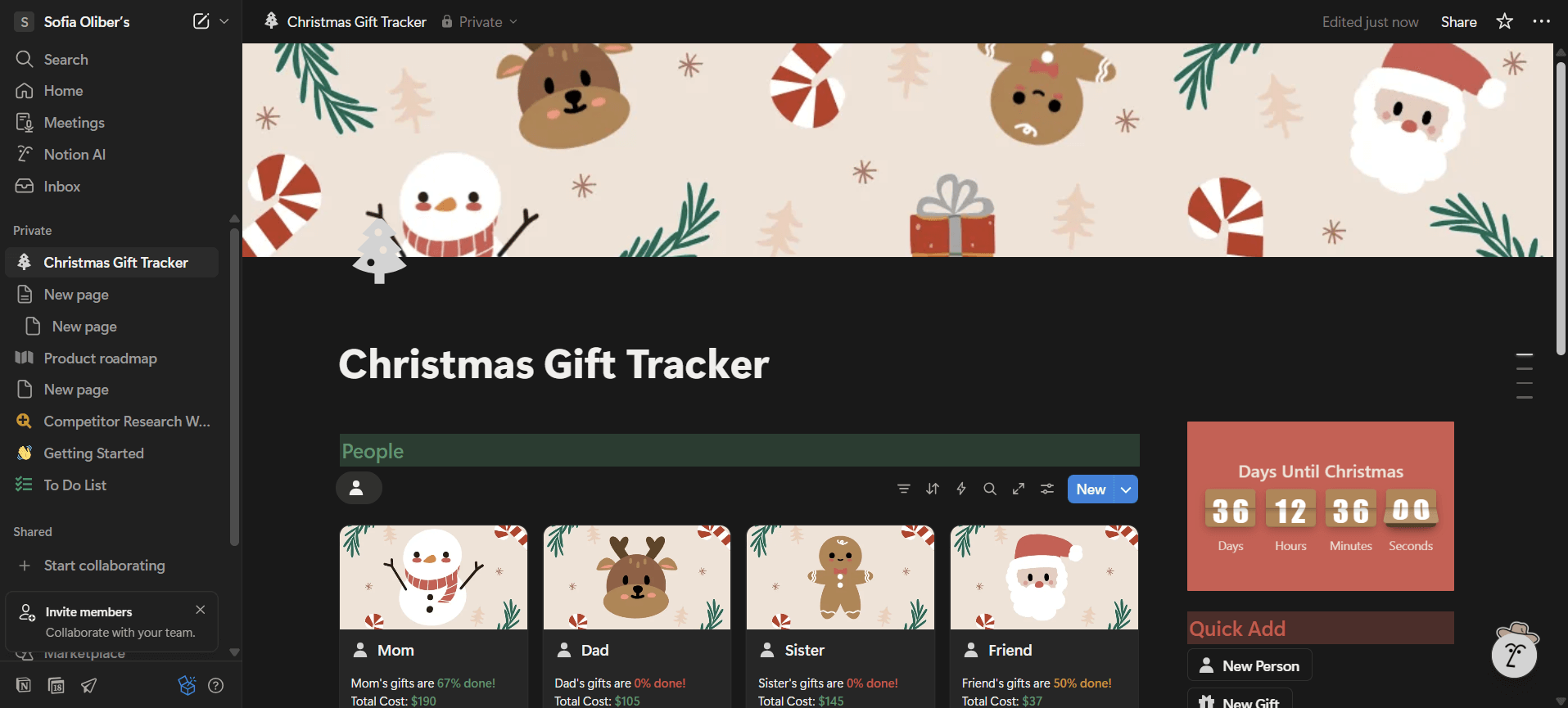
I love Notion’s variety of creative templates.
Users can shape Notion to fit almost any workflow. I find everyday and professional tasks much easier to manage thanks to simple features like shopping lists, to-do items and other customizable blocks.
Think of Notion as a malleable do-it-yourself platform. Its templates and functionalities are extremely customizable, and its comprehensive tool set can manage anything from journals to workflows.
Opt for Notion if you need a tool that’s even more flexible than ClickUp. After the free plan, the Plus plan starts at $10 per member per month annually. You can also check out Notion’s paid tiers free for 30 days, or learn more about the platform in our Notion review.

Free
Plus
Business
Enterprise
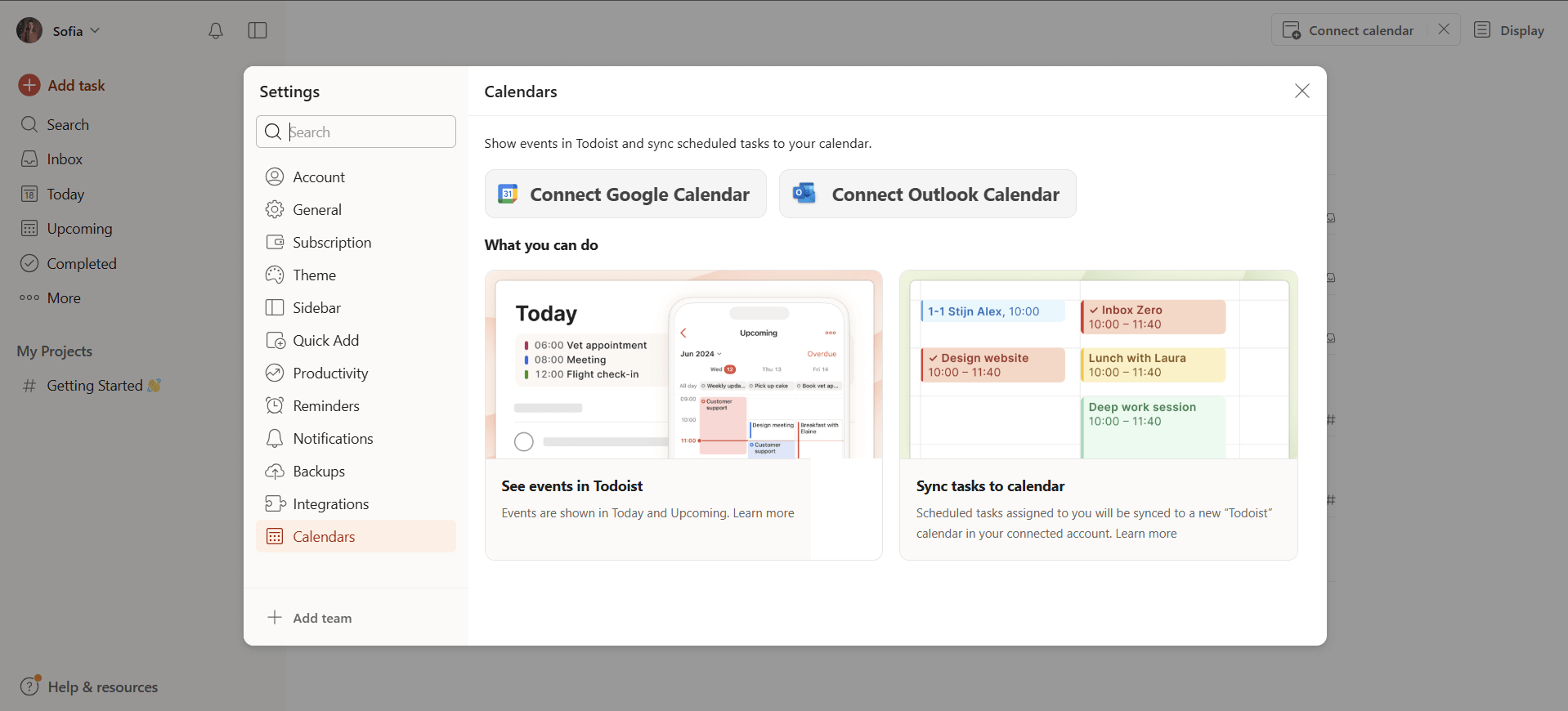
You can connect Todoist to your preferred calendar app.
Todoist lives up to its name: It’s a focused, highly capable to-do list app with extras like automations for recurring tasks and broad integration support. It’s the ideal middle ground between a simple task manager and a full project management platform.
Todoist goes beyond basic task lists by providing structure to manage more involved work. You can group tasks with labels, break them down with subtasks and use filters to find essential tasks, all without the heaviness of a full project management suite.
If you want a tool that’s more straightforward than Trello, Todoist is a great free option. Plus, its Pro plan starts at just $4 per month. You can also try Todoist’s Business plan free for 14 days, or read more about it in our Todoist review.

Free
Pro
Business
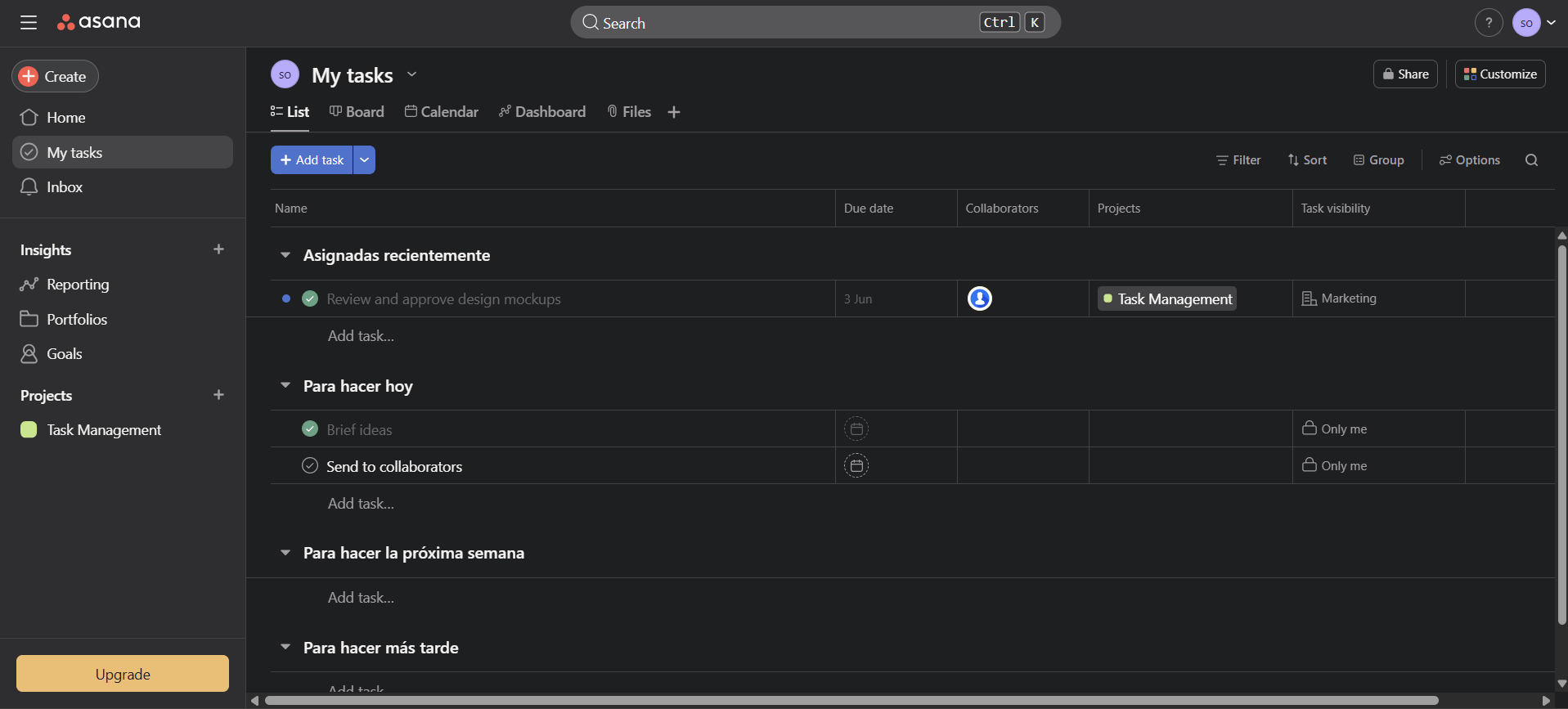
The “my tasks” view is useful for keeping track of multiple tasks simultaneously.
Asana has a clean and intuitive design, including tools like goals, project tracking and automations. It’s an easy-to-use yet robust platform for managing personal tasks and professional projects.
Asana can be adapted for solopreneurs and teams alike thanks to its structured interface and advanced tools. It’s a useful platform for anyone managing multiple projects that are expected to grow over time, as it allows for upgrades.
Choose Asana if you need a flexible tool that can scale with your projects. After the free plan, the Starter plan starts at $10.99 per user per month annually. Try a premium Asana plan for free for 14 days, or read about the platform in our Asana review.

Starter
Advanced
Enterprise
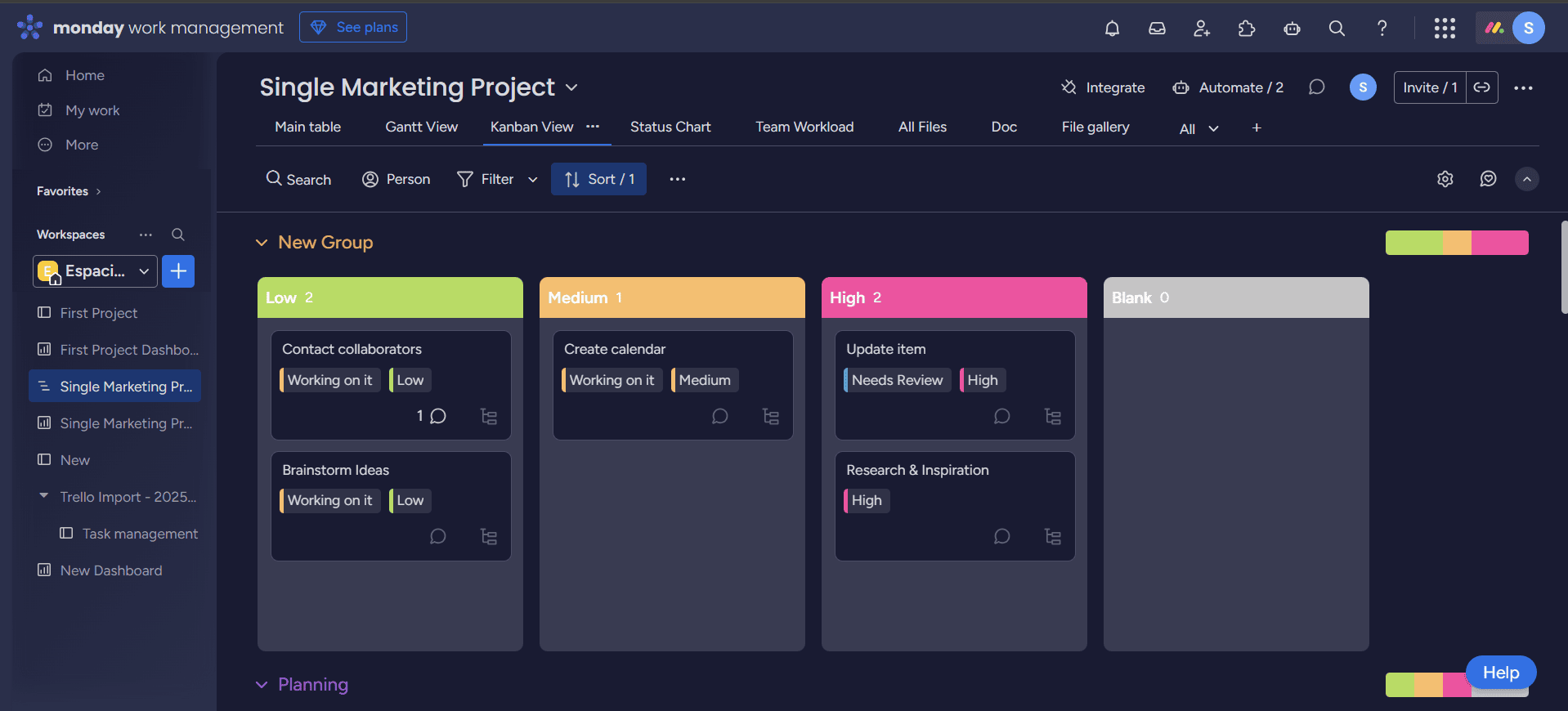
monday.com’s kanban boards are customizable and easy to use.
monday.com delivers an impressive project management experience from a functionality and design point of view. It’s easy to use this platform to scale your projects and workflows, making it one of the top choices for small businesses.
monday.com’s dashboard and automation tools make this software versatile. It’s a great choice if you’re starting a project that will become more complex over time, as it includes a large set of core features, such as multiple views, integrations and customization options.
monday.com is not made for simple tasks — it’s not a great option for free project management apps because it’s designed for growing projects or more complex workflows. The Standard plan starts at $12 per user per month. You can try monday.com’s premium plans for free for 14 days, or read more about it in our monday.com review.

Basic
Standard
Pro
Enterprise
I manually tested each of these platforms, focusing on key aspects for personal use such as usability, simplicity and performance.
If your personal projects are starting to feel a little messy, you might want to add a project management app to your strategy. ClickUp is the best choice for personal use, as it can adapt to any kind of project and scale as needed. Start testing ClickUp today with the free plan or any paid plan’s 30-day money-back guarantee.
Which software would you consider using? Have you used any of these tools before? Thanks for reading, and don’t hesitate to share your thoughts in the comments.
Anyone managing tasks, side hustles or personal projects can use project management software.
No, you don’t need technical skills to use project management software; anyone can get started with easy tools like Trello and Todoist.
Personal project management software is essential for scaling and organizing any project. Side hustles and personal goals can grow with the help of a structured system. If you’re exploring your options, you can also check out our ranking of the best project management tools for a general overview of what’s available.

ClickUp is my top choice for personal projects thanks to it offering so many important features as a free project management tool; most other project management tools charge for the same usability. Plus, ClickUp can function well as a simple task manager or as a professional tool. You can try ClickUp for free, or test its premium plans with a 30-day money-back guarantee.
If you need an initial general overview of the tools that could best fit your needs, take a look at this comparison chart of my top six tools.
I tested all of the software firsthand, from building boards to running automations and trying out the AI, to see how each option holds up in real workflows.
ClickUp and Asana offer a range of views and options, while Todoist remains one of the simplest tools. Note that Notion offers more data views than it claims; they’re just not labeled as “views.”
| Tool: | View Types | Time Tracking | Custom Fields | Dashboards | Real-Time Collab |
|---|---|---|---|---|---|
| 16: list, board, Gantt & more | Yes | Unlimited | Customizable with cards or widgets | |
| 7: board, dashboard, timeline & more | Not included | Yes | Basic features | |
| 6: table, list, board, gallery, calendar & timeline | Not included | Yes | Yes, through templates | |
| 3: list, panel & calendar | Not included | Not included | Not included | |
| 9: list, board, Gantt & more | Yes | Yes | Yes, for boards & portfolios | |
| 7: kanban, timeline, calendar & more | Yes | Yes | Yes, for boards & portfolios |
Except for Todoist, my recommended software solutions have good automation options. Additionally, most offer integrations with key third-party services like Slack or mail providers.
| Tool: | Integration Count | Top Integrations | Native vs 3rd-Party | Automation |
|---|---|---|---|---|
| 1,000+ | Zoom, GitHub, HubSpot | Hybrid | Advanced automations & apps |
| 200+ | Confluence, Clockify, Firefox | Hybrid | Yes, built-in automations |
| 130+ | Slack, Google, Figma | Hybrid | Custom automations |
| 80+ | Chrome, Microsoft Teams, Google Calendar | Mostly third-party integrations | Not included |
| 200+ | Dropbox, Google Drive | Mostly third-party integrations | Advanced automations |
| 200+ | Slack, Google Sheets, Adobe | Hybrid | Advanced automations |
Now that I’ve compared the five best project management and task management software above, let’s dive into more details for each individual tool to show the pros and cons for individual users.
ClickUp’s free plan includes Gantt charts.
ClickUp is one of the most complete project management options, offering essential features such as customizable workflows, advanced views and integrations. It delivers professional results, even as free project management software.
Few platforms bring together so many tools while still delivering a high-quality product. You can customize task organization and workflows, perform repetitive tasks automatically and integrate AI features. However, the software is so extensive that it can feel overwhelming for inexperienced users who might need a more simple task management app.
Opt for ClickUp if you need a powerful tool to manage your projects. If you’re on a budget, ClickUp’s free plan is among the best free project management tools. Read more in our ClickUp review, or you can test its free plan today.
Free Forever
Trello’s kanban board design is simple and effective.
Trello excels at simplicity thanks to its straightforward and familiar interface. The layout is clear from the start: You get a complete kanban-based design with a few more advanced tools.
The fact that Trello is visual and minimalist doesn’t make it less productive. The platform includes key features like automations and AI functionalities to summarize or brainstorm ideas. If that isn’t enough, power-ups are available to upgrade your boards.
Trello’s simplicity is its biggest selling point. It might not be as complete as ClickUp, but it can help with personal or small projects. The Standard plan starts at $5 per user per month, annually. Start using Trello for free, or learn more about it in our Trello review.
Free
Standard
Premium
Enterprise
I love Notion’s variety of creative templates.
Users can shape Notion to fit almost any workflow. I find everyday and professional tasks much easier to manage thanks to simple features like shopping lists, to-do items and other customizable blocks.
Think of Notion as a malleable do-it-yourself platform. Its templates and functionalities are extremely customizable, and its comprehensive tool set can manage anything from journals to workflows.
Opt for Notion if you need a tool that’s even more flexible than ClickUp. After the free plan, the Plus plan starts at $10 per member per month annually. You can also check out Notion’s paid tiers free for 30 days, or learn more about the platform in our Notion review.
Free
Plus
Business
Enterprise
You can connect Todoist to your preferred calendar app.
Todoist lives up to its name: It’s a focused, highly capable to-do list app with extras like automations for recurring tasks and broad integration support. It’s the ideal middle ground between a simple task manager and a full project management platform.
Todoist goes beyond basic task lists by providing structure to manage more involved work. You can group tasks with labels, break them down with subtasks and use filters to find essential tasks, all without the heaviness of a full project management suite.
If you want a tool that’s more straightforward than Trello, Todoist is a great free option. Plus, its Pro plan starts at just $4 per month. You can also try Todoist’s Business plan free for 14 days, or read more about it in our Todoist review.
Free
Pro
Business
The “my tasks” view is useful for keeping track of multiple tasks simultaneously.
Asana has a clean and intuitive design, including tools like goals, project tracking and automations. It’s an easy-to-use yet robust platform for managing personal tasks and professional projects.
Asana can be adapted for solopreneurs and teams alike thanks to its structured interface and advanced tools. It’s a useful platform for anyone managing multiple projects that are expected to grow over time, as it allows for upgrades.
Choose Asana if you need a flexible tool that can scale with your projects. After the free plan, the Starter plan starts at $10.99 per user per month annually. Try a premium Asana plan for free for 14 days, or read about the platform in our Asana review.
Starter
Advanced
Enterprise
monday.com’s kanban boards are customizable and easy to use.
monday.com delivers an impressive project management experience from a functionality and design point of view. It’s easy to use this platform to scale your projects and workflows, making it one of the top choices for small businesses.
monday.com’s dashboard and automation tools make this software versatile. It’s a great choice if you’re starting a project that will become more complex over time, as it includes a large set of core features, such as multiple views, integrations and customization options.
monday.com is not made for simple tasks — it’s not a great option for free project management apps because it’s designed for growing projects or more complex workflows. The Standard plan starts at $12 per user per month. You can try monday.com’s premium plans for free for 14 days, or read more about it in our monday.com review.
Basic
Standard
Pro
Enterprise
I manually tested each of these platforms, focusing on key aspects for personal use such as usability, simplicity and performance.
If your personal projects are starting to feel a little messy, you might want to add a project management app to your strategy. ClickUp is the best choice for personal use, as it can adapt to any kind of project and scale as needed. Start testing ClickUp today with the free plan or any paid plan’s 30-day money-back guarantee.
Which software would you consider using? Have you used any of these tools before? Thanks for reading, and don’t hesitate to share your thoughts in the comments.
Anyone managing tasks, side hustles or personal projects can use project management software.
No, you don’t need technical skills to use project management software; anyone can get started with easy tools like Trello and Todoist.